
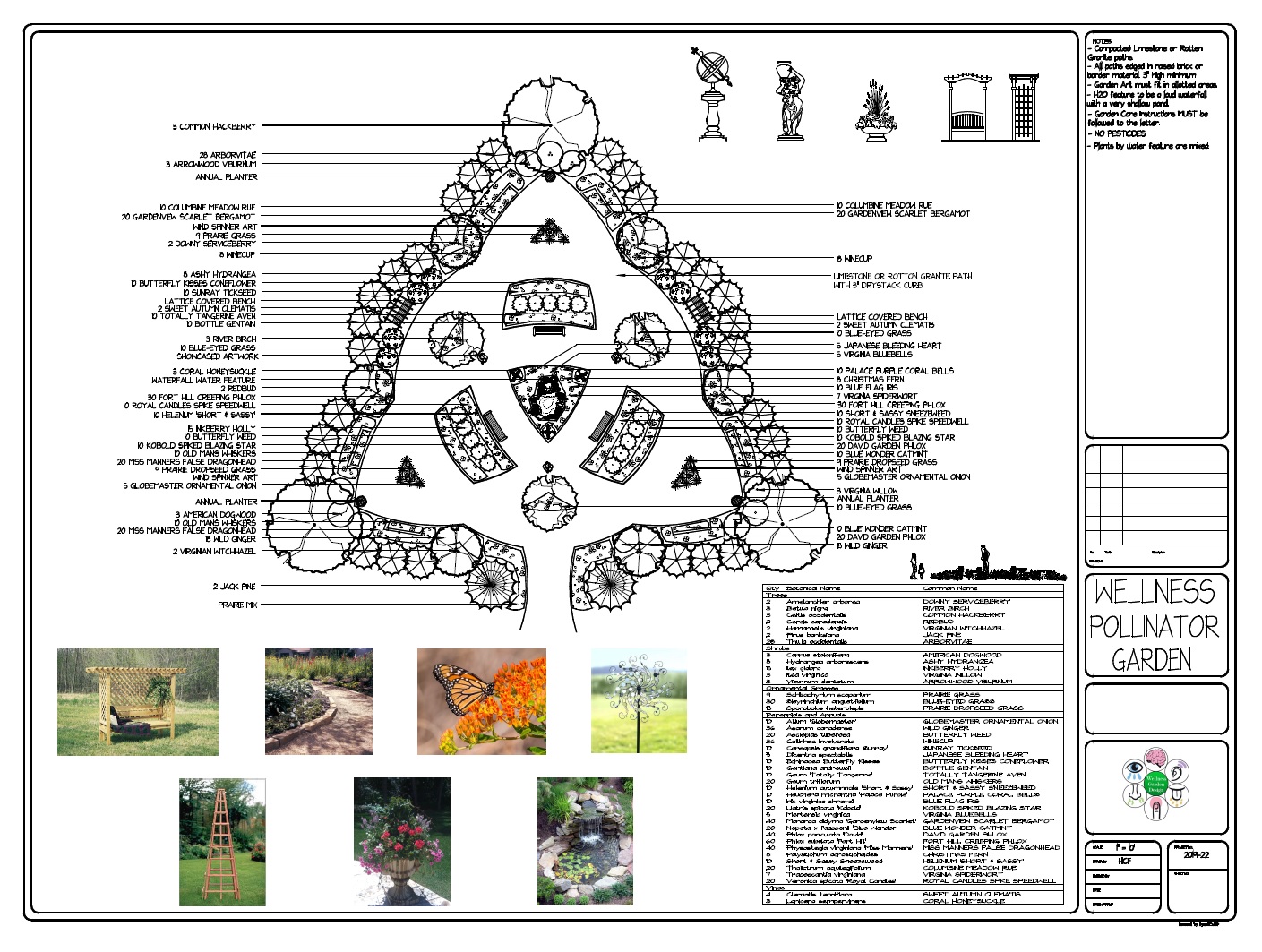
An inclusive wellness garden—what does “inclusive” really mean? Lately, the term has been widely discussed, but through my research, I’ve realized it can take on many meanings. True inclusivity requires a shift in perspective, learning to recognize and address what has been unintentionally excluded. It’s about consciously designing spaces that welcome and accommodate everyone, ensuring no one is left out.
Clearly for me, it was designing gardens that are not just accessible to all. I wanted them to be inclusive to all. So if a facility is labeled accessible, doesn’t that mean its inclusive? No, it doesn’t.
Merriam-Webster defines accessible as: ‘able to be reached or entered’. This is what having an accessible entrance means. Thus, if a person who uses a wheelchair is able to get into a garden because of a ramp or a curb cut out, that’s accessibility. A garden that is inclusive goes far beyond the basic idea of people being able just to enter it.
In an inclusive wellness garden environment, people with or without disabilities mobilize around the garden in the same way. They utilize the equipment and amenities inside of the garden equally. A garden that has accessible or adaptable equipment but isolates that activity in a corner is not an inclusive garden. A garden that has no plants that smell or no auditory additions is not an inclusive garden (to the blind). I think you get the point. However, when you’re able to walk, hear and see, these things can get overlooked.
Tips To Create An Inclusive Landscape
Accessibility and Path Design
Smooth and Accessible Paths:
- Utilize ramps with a grade of 5% or less to accommodate all elevation changes.
- Make paths at least five feet wide to comfortably fit two people walking arm in arm or alongside a wheelchair.
- Use foot- and wheel-friendly materials like concrete, limestone, rotten granite, or stone pavers for surfaces. Keep in mind that pavers require regular maintenance to prevent trip hazards
- Dead-end paths require adequate turnaround space (at least 5 feet) to accommodate wheelchairs. However, in memory care facilities, avoid dead ends to prevent disorientation.
- Plant nut or berry trees away from paths to eliminate trip hazards.
- Define path edges with curbs to provide clear boundaries and tactile cues for those with visual impairments
Enhanced Universal Accessibility:
- Incorporate tactile and sensory signage, including braille and raised symbols, on maps and directional signs. This helps all users navigate the garden.
- Add a railing along certain stretches of the path to provide extra stability. This allows individuals who require additional support to walk independently.
Sensory and Therapeutic Features
Multi-Sensory Plantings:
- Include plants selected not only for visual appeal but also for their fragrance, texture, and even sound. Rustling leaves and branches knocking are good examples.
- Evaluate plants based on garden purpose. When in doubt, opt for edible and safe-to-handle species. These engage multiple senses.
Integrated Sensory Enhancements:
- Consider additional features that stimulate the senses beyond plant life. Examples include fountains, wind chimes, mason bee houses, garden art, and bird feeders. These create a dynamic soundscape.
- For tactile and visual diversity, integrate seasonal planters. These add excitement even in the winter months.
Interactive Water and Shade Elements:
- Install easy pull-type handled water spigots (avoiding round knobs) for better grip or ones that activate via a foot petal.
- Be sure to add multiple shade options (like pergolas, canopies, or strategically placed trees). This protects users from the sun and provides comfortable, cooler spaces.
- Creating meditative zones with gentle water features, such as a small stream or interactive water play area, offers both cooling effects and soothing ambient sounds.
Environmental and Ecological Considerations
Sustainable Plant Choices:
- Use native and drought-resistant plants to support local biodiversity and reduce water usage.
- Favor organic soil amendments like compost. This creates a healthy, pesticide-free environment that benefits both flora and fauna.
Wildlife and Ecological Harmony:
- Encourage friendly wildlife by providing pollinator-friendly habitats.
- Avoid pesticides altogether. If pest control is necessary, opt for integrated pest management methods. These target harmful pests while sparing beneficial species.
Additional Universal Design and Comfort Features
Ergonomic and Inclusive Seating:
- Provide ample seating options, including both benches and chairs. Ensure there is enough space nearby for a wheelchair to park.
- For therapy-specific raised beds, consider a manufactured height of 36 inches with a kick-plate. This facilitates both seated and standing engagement. Standard raised beds at 24 inches high are ideal for those who cannot bend down easily.
Interactive and Informative Elements:
- Install educational panels that share information about local flora, fauna, and sustainable practices.
- Use varied textures in seating and ground materials to provide tactile stimulation. This helps differentiate between different areas of the garden.
By integrating these features, your wellness garden not only becomes a model of inclusivity, therapeutic enrichment, and sustainable design but also ensures a safe, engaging, and sensory-rich experience for all visitors.
Additionally, I’d love to hear about any thoughts or challenges you’ve encountered while visiting a garden. What aspects have enhanced or hindered your experience?